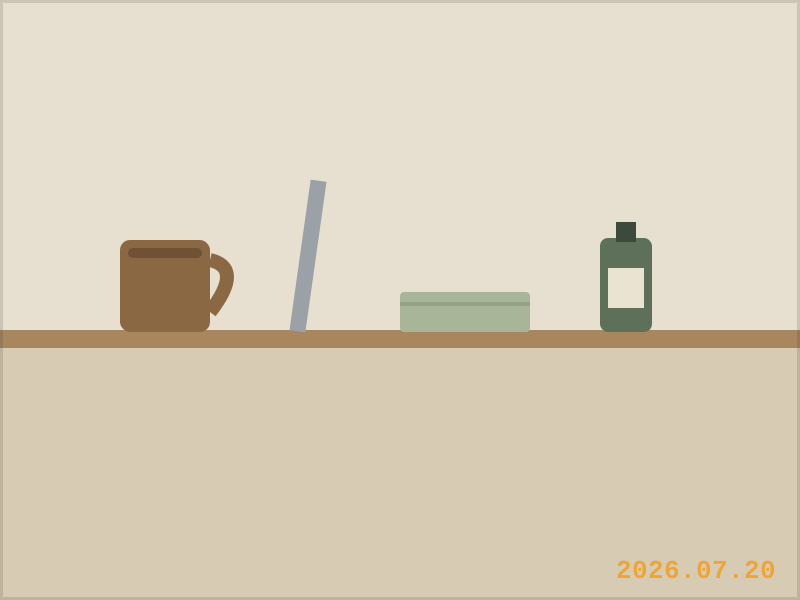
There is a shelf in my apartment that has survived four moves without being edited. A mug, a ruler, a folded cloth, one small bottle. None of it cost much. All of it would be the first thing I grabbed in a fire, after the hard drives.
I have been trying to work out what these objects have in common, because whatever it is, it is the thing I am trying to put into the products we make at Ecoand, and it resists being put anywhere on purpose.
The closest I have gotten is this: they all feel like they have already lived a life. Not my life, necessarily. Just a life. The mug looked slightly used on the day I bought it — the maker left the tool marks in. The ruler has somebody else's pencil ticks on the back, from whatever it measured before it reached me. They arrived mid-story.
New things ask you to keep them perfect. Old-feeling things give you permission to begin.
Compare this to the drawer below the shelf, which is where objects go to be perfect and ignored. A beautiful notebook too good to write in. Headphones in a case so nice I never open it. A knife I was saving for occasions that apparently never occur. The drawer is a museum of my own hesitation.
The difference is not quality and it is definitely not price. I think it is whether the object's design admits that it will be used. A surface that will scratch, and will look right scratched. A material that records the owner instead of resisting them. Wood does this. Waxed canvas does this. Most plastic refuses on principle — it cannot age, only fail.
There is a business insight buried in here somewhere, and I keep circling it in meetings without landing: we should be designing for the hundredth use, not the unboxing. The unboxing lasts ninety seconds. The hundredth use is where the object either becomes part of someone's day or gets demoted to the drawer.
I do not fully know how to do this yet. But the shelf knows, and I keep it around partly as a reference library.